 Merken
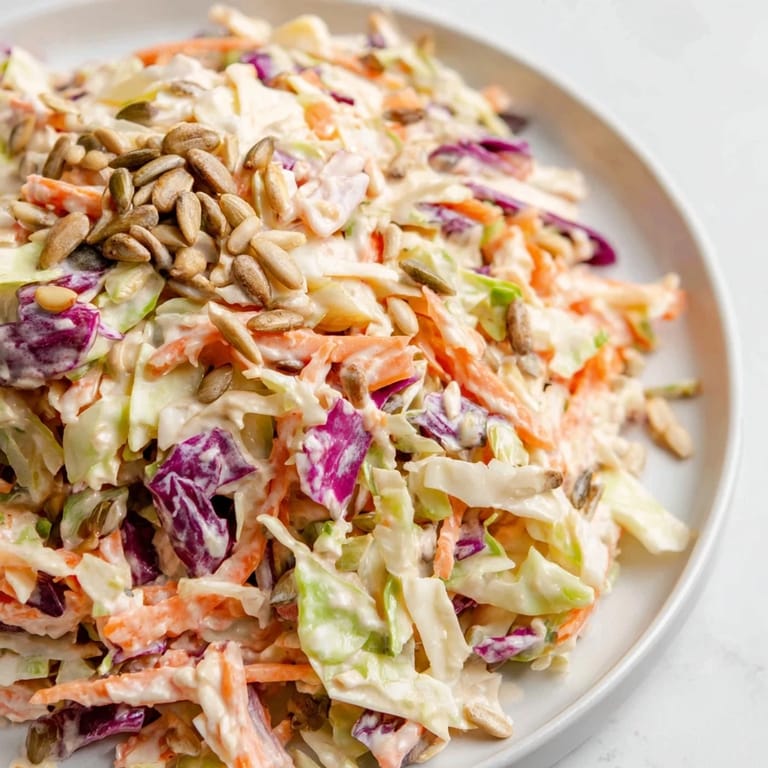
 There's something about the sound of a knife hitting the cutting board that signals the start of something good. I discovered this coleslaw on a humid summer afternoon when my neighbor handed me a container of vibrant, crunchy cabbage salad and said it was the only thing that mattered at her backyard gatherings. One bite and I understood why—the creamy dressing clinging to crisp shreds of green and red cabbage, that unexpected snap of sunflower seeds, the slight tang cutting through everything. Now it's become my answer to almost every potluck question: what should I bring?
I made this for a company picnic where everyone brought something forgettable—except the person who brought nothing and ate three bowls of mine. That's when I realized this salad isn't just a side dish; it's the quiet MVP of any table. The colors alone catch people's eyes before they even taste it.
Ingredients
- Green cabbage, 4 cups finely shredded: The backbone of any good coleslaw; it's mild, sturdy, and holds its crunch better than you'd expect.
- Red cabbage, 2 cups finely shredded: This adds sweetness and that gorgeous color that makes the salad look like it belongs at a celebration.
- Carrots, 2 large peeled and grated: They bring natural sweetness and a tender texture that balances the cabbage's snap.
- Green onions, 3 thinly sliced: A whisper of onion flavor without the bite; slice them just before mixing so they stay fresh.
- Mayonnaise, 2/3 cup: The base of your dressing; use good quality mayo or the whole thing falls flat.
- Apple cider vinegar, 2 tablespoons: This is what keeps the coleslaw from tasting like a mayonnaise bomb—don't skip it.
- Honey, 1 tablespoon: A touch of sweetness that rounds out the vinegar's sharpness; sugar works but honey feels more intentional.
- Dijon mustard, 2 teaspoons: Just enough to add a subtle warmth and sophistication to the dressing.
- Celery seed, 1/2 teaspoon: This is the secret ingredient that people notice but can't identify; it gives the whole thing a savory edge.
- Salt and black pepper, to taste: Season boldly—coleslaw needs it.
- Roasted sunflower seeds, 1/2 cup unsalted: These stay crunchy until the very end and add a toasted, nutty element that elevates everything.
Tired of Takeout? 🥡
Get 10 meals you can make faster than delivery arrives. Seriously.
One email. No spam. Unsubscribe anytime.
Instructions
- Prepare your vegetables with intention:
- Shred the cabbage as finely as you can without losing your fingers—a mandoline works beautifully if you have one, but a sharp knife and patience do the trick too. The finer the shreds, the more evenly the dressing coats everything.
- Combine the raw vegetables:
- Toss the green cabbage, red cabbage, carrots, and green onions together in a large bowl. This is your moment to make sure nothing is clumped together.
- Build your dressing in a separate bowl:
- Whisk the mayonnaise, apple cider vinegar, honey, Dijon mustard, celery seed, salt, and pepper until completely smooth. Taste as you go—this is where the magic lives, and you want it balanced.
- Marry the salad and dressing:
- Pour the dressing over your vegetables and toss everything together with purpose, making sure every shred gets coated. Don't be timid here; the vegetables need to be fully embraced by that creamy dressing.
- Toast the sunflower seeds at the last second:
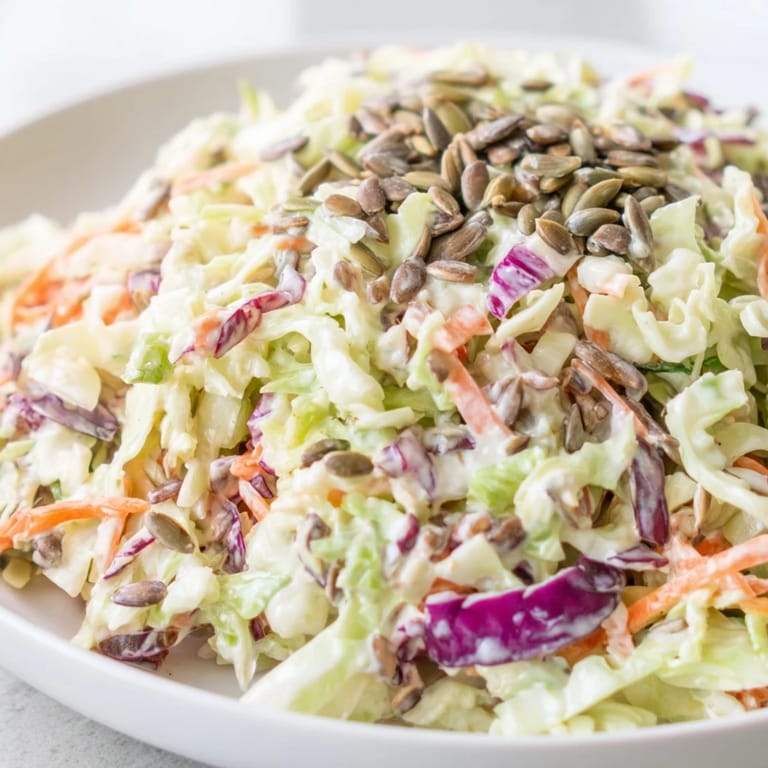
- Wait until just before serving to scatter the sunflower seeds over the top. This keeps them crunchy and reminds people that texture matters.
 Merken
 My cousin once brought a version of this to Thanksgiving and my uncle, who complains about literally everything, asked for the recipe. That was the moment I knew this salad had passed some kind of test.
Why Texture Matters So Much
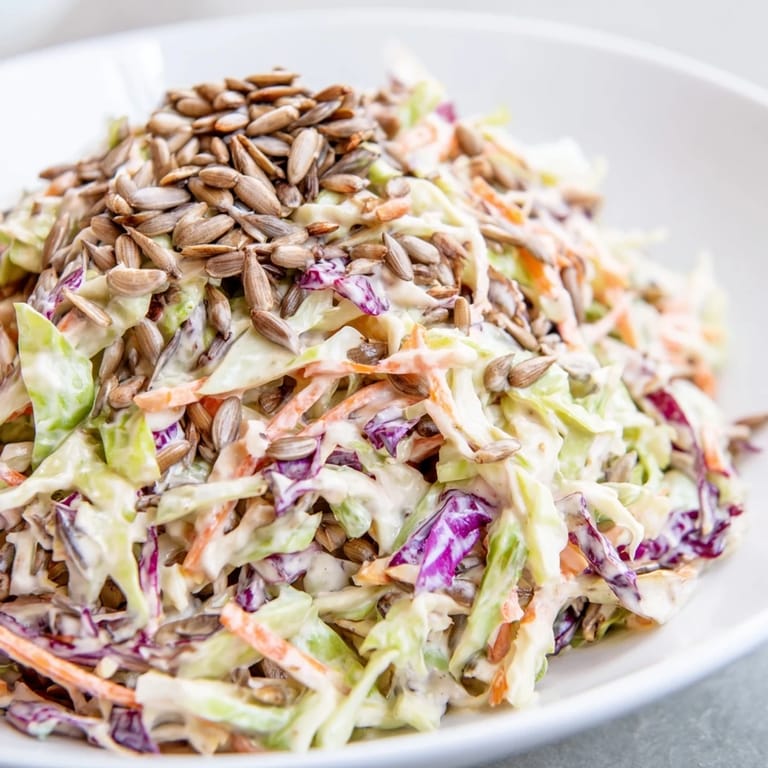
There's a reason this salad works where others fail: it refuses to get boring in your mouth. The raw crunch of cabbage, the soft give of grated carrots, the creamy dressing that clings without drowning, and that final bite of sunflower seeds—it's a conversation between different textures that feels intentional, not accidental. That's why people go back for seconds.
Making It Your Own
I've learned that coleslaw is one of those dishes that welcomes improvisation without falling apart. Sometimes I swap half the mayo for Greek yogurt when I'm feeling lighter, which gives everything a slight tang and cuts the heaviness. Other times I add a handful of raisins or dried cranberries for a sweet surprise, or thin-slice some crisp apple just before serving for extra freshness. The base is solid enough to handle your personality.
When to Make This and What to Serve It With
This salad shines brightest when you're cooking outdoors or feeding a crowd, but it's equally at home on a weeknight next to roasted chicken or tucked into a sandwich. It pairs effortlessly with grilled meats because the vinegar cuts through richness, but it's also substantial enough to stand alone as a light lunch. The beauty is that it looks intentional whether you're at a picnic or a quiet Tuesday dinner.
- Make it a few hours ahead if you prefer softer cabbage, or right before serving for maximum crunch.
- Refrigerate in an airtight container for up to two days, though the texture shifts as the vegetables release water.
- Keep the sunflower seeds separate and scattered on top just before eating for best results.
 Merken
 Make this salad and watch what happens when it shows up at a table—people light up. It's simple, honest, and unpretentious, which is maybe the best thing you can say about food.
Rezept-Fragen & Antworten
- → Wie bleibt der Salat knackig?
Frisches, fein geschnittenes Kraut und Karotten bilden die Basis. Das Dressing wird erst kurz vor dem Servieren hinzugefügt, um die Frische zu bewahren.
- → Kann ich das Dressing variieren?
Ja, das Dressing lässt sich durch griechischen Joghurt für eine leichtere Variante oder durch andere Essigsorten leicht anpassen.
- → Welche Rolle spielen die Sonnenblumenkerne?
Sie sorgen für einen angenehmen Crunch und fügen ein nussiges Aroma hinzu, das den Salat abwechslungsreich macht.
- → Wie lange hält sich der Salat im Kühlschrank?
Im Kühlschrank bleibt der Salat bis zu 2 Stunden frisch, danach wird er etwas weicher und verliert an Knackigkeit.
- → Gibt es Alternativen für den Honig im Dressing?
Man kann auch Zucker oder Ahornsirup als süßen Akzent verwenden, um den Geschmack leicht zu variieren.